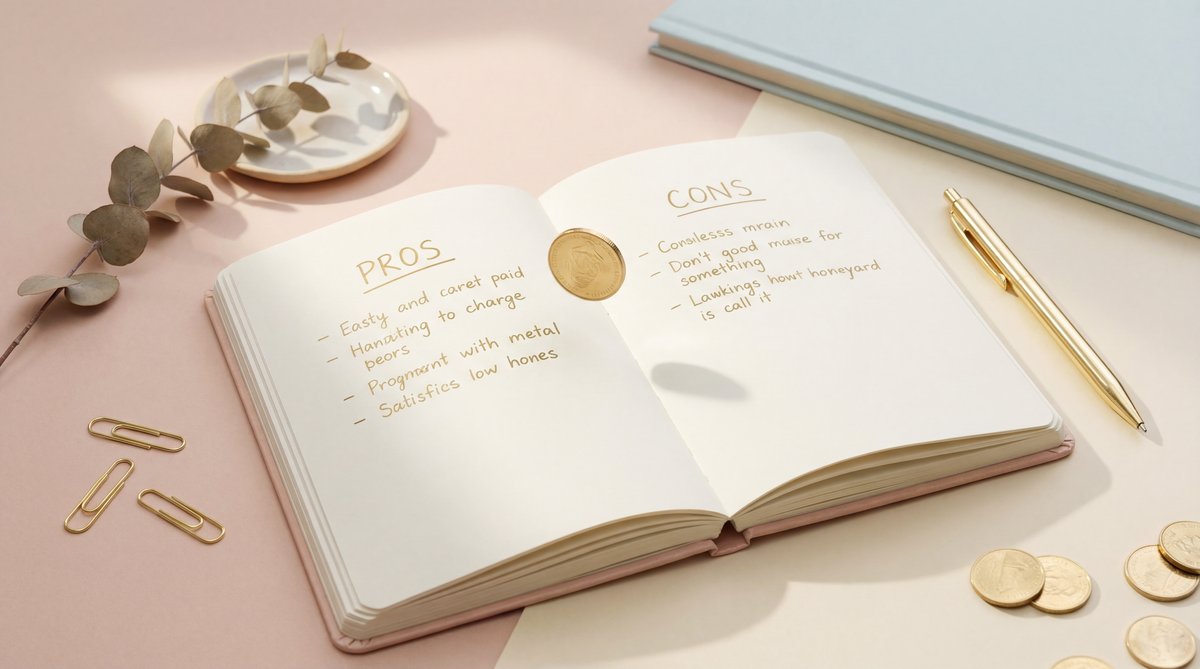
The Paradox of Choice — When More Options Make You Worse Off
Psychologist Barry Schwartz famously described the "Paradox of Choice": when faced with too many options, we experience paralysis, regret, and paradoxically, lower satisfaction. When your options are roughly equal in quality — say, two restaurants you'd both enjoy, or two job offers with similar pay — the cognitive cost of deciding actually outweighs the benefit of "optimizing" your choice.
Here's what research reveals: in many cases, random selection from a curated set of good options produces outcomes as good as careful deliberation — but with far less mental drain. You've already filtered down to viable choices; now your brain is just spinning its wheels. The mathematics is clear: at a certain point, more deliberation yields diminishing returns.
The Coin Flip Trick — Decision Clarification, Not Delegation
This is the insight that changes everything: the coin flip isn't about letting chance decide. It's about revealing what you actually want. When the coin lands, don't just accept the result — pay attention to your gut reaction. If you feel relieved, that's your answer. If you feel disappointed, go with the other option. Psychologist Dan Ariely has explored this approach extensively.
The coin flip forces commitment and eliminates the endless loop of re-evaluation. Instead of mentally oscillating between options, you create a moment of clarity. Your body's immediate reaction tells you more than hours of pros-and-cons lists ever could. It's decision science masquerading as chance.
Random Sampling in Research and Business
Beyond personal decisions, randomness powers some of the world's most sophisticated systems. Companies use random sampling everywhere: A/B testing reveals which design actually converts better, random user interviews prevent cherry-picking success stories, random quality checks catch manufacturing defects before they ship.
Why does random sampling beat hand-picking? Because it eliminates selection bias. If you manually choose which features to test or which customers to interview, you unconsciously pick the ones that confirm what you already believe. Randomness forces you to confront uncomfortable truths.
Netflix and Spotify use randomized recommendations to break users out of filter bubbles — the algorithm occasionally suggests something outside your usual taste, which both expands your horizons and prevents stagnation. Some elite universities have explored lottery-based admissions for waitlisted students; Dutch medical schools use randomization in their selection process. The result? Equally qualified cohorts, but fairer and less biased outcomes.
Fighting Cognitive Bias with Randomness
Our brains are pattern-recognition machines, which is powerful but also makes us vulnerable to systematic biases. Randomness is like kryptonite for cognitive distortions:
- Anchoring bias — The first option you consider disproportionately influences your thinking. Randomizing the order prevents this anchoring effect.
- Confirmation bias — You naturally gravitate toward information that confirms existing beliefs. Random assignment forces you to explore options you'd usually skip.
- Status quo bias — The current state feels safer than change. A coin flip can nudge you to consider alternatives you'd normally dismiss.

Practical Randomness: Tools and Techniques
You don't need fancy probability theory to use randomness in daily life. Here are the tools:
- The Wheel Spinner — for group decisions like restaurant selection, game night choices, or team assignments. Everyone gets a say; chance decides fairly.
- Name Picker tools — for genuinely random selection with no favoritism. Perfect for selecting whose idea to try first, or who gets the last slice.
- The "satisficing" strategy — set a minimum threshold for what you need, then pick the first random option that meets it. Eliminates endless comparison.
- Random walk creativity — use random word generators or pick a random Wikipedia page as creative input. Constraints breed innovation.
- Weekly journaling prompt — ask a random reflection question to expand your thinking in new directions.
When two options are close enough that you can't decide, that's a signal they're actually equivalent — and that means any choice is the right one.
The paradox is that randomness, properly applied, makes you less random. It breaks you out of analysis paralysis, forces decisions that your gut already knew were right, and prevents bias from masquerading as careful judgment. The next time you're stuck between two good options, remember: that coin isn't deciding for you. It's deciding with you.