The Birth of Cards in Tang Dynasty China
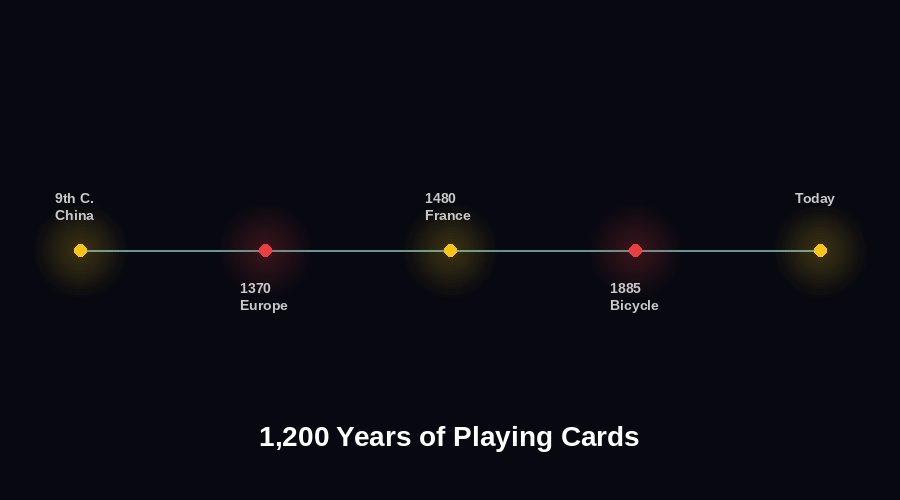
Playing cards didn't invent themselves in Europe—they arrived there as immigrants, travelers on the same silk roads that brought tea, silk, and gunpowder west. The earliest known playing cards emerged during the Tang Dynasty in 9th-century China, growing from domino and tile-based games. These early cards were likely made from paper, a Chinese innovation that was itself revolutionary. Unlike the rigid tiles of predecessor games, cards were flexible, stackable, and portable—they could move with merchants, soldiers, and monks. By the 10th century, card games had spread throughout China and became so popular that some families prohibited gambling with them. The designs featured suits related to currency: coins, strings of coins, myriads, and tens.
The Mamluk Deck Transforms the Game
As cards traveled west through Persia, they evolved dramatically. By the 14th century, the Mamluk deck in Egypt had established a four-suit system that would influence card design for centuries: cups, coins, swords, and polo sticks. This wasn't accidental—the suits reflected the social hierarchy of medieval Islamic society, each representing a different rank or order. The Mamluk deck typically contained 52 cards, the same number that defines modern decks today. These cards were hand-painted on paper or pasteboard, decorated with intricate patterns and calligraphy. Mamluk decks became symbols of sophistication and were traded along Mediterranean routes, catching the attention of Italian and Spanish merchants who would introduce them to Christian Europe.
Europe Discovers an Exotic Luxury
Playing cards arrived in Europe around the 1370s, entering through Venice and other Mediterranean trade hubs. Initially, they were objects of extreme luxury—hand-painted, gilded, and affordable only to nobility and wealthy merchants. A single deck could cost as much as a skilled worker earned in months. By the 1400s, card games had become so fashionable that they appeared in the households of kings and in the background of Renaissance paintings. Royals commissioned custom decks featuring heraldic symbols and portraits. Yet these early European cards still mimicked Islamic suit symbols. Change would come when the French decided to reshape the game entirely.
France Revolutionizes the Suit System
Around the 1480s, French card makers invented the four-suit system that dominates modern decks: hearts, diamonds, clubs, and spades. Why these symbols? The hearts represented the clergy, diamonds symbolized merchants, clubs stood for peasants, and spades represented nobility—a brilliant microcosm of feudal society. More importantly, these suits were far simpler to draw than the elaborate Islamic imagery, making mass production feasible. The French innovation spread rapidly through Europe and eventually became the global standard. This wasn't just a design choice; it was a technological and social breakthrough that would democratize the game.
Mass Production and the Everyman's Game
The real transformation came with woodblock printing technology in the 15th and 16th centuries. Where hand-painted decks had been luxuries reserved for elites, woodblocks made it possible to print hundreds of decks quickly and cheaply. By the 1500s, cards had moved from palace to tavern, from kings to commoners. Ordinary people could now afford to play. Printers competed fiercely, producing increasingly standardized designs. Cards became tools of entertainment, gambling, and even education—there were decks depicting geography, astrology, and historical figures. The printing revolution had democratized not just text, but gaming itself.
Bicycle Decks and the Standardization Era
Jump forward to 1885. The United States Playing Card Company began manufacturing Bicycle cards in Cincinnati, Ohio—and inadvertently created the world's most iconic deck. The Bicycle brand featured a distinctive back design with interlocking wheels (hence the name) and was manufactured with unprecedented consistency and durability. What made Bicycle revolutionary wasn't just quality, but standardization. Every card was identical in size, weight, and finish. Magicians, gamblers, and casual players alike adopted Bicycle decks because they were reliable. A card would behave the same way in a shuffle whether it was fresh from the factory or months old. By the early 20th century, Bicycle had become the default deck worldwide, a status it has maintained for over 140 years.
The Symbolism of 52
There's an elegant numerology to the standard deck that many players never notice. Fifty-two cards corresponds to the 52 weeks in a year. Four suits represent the four seasons. Thirteen cards per suit align with the 13 lunar cycles. The four court cards (Jack, Queen, King, Ace) in each suit could represent the four phases of the moon. Whether intentional or coincidental, the 52-card deck mirrors the cosmos itself—a microcosm of time and celestial order wrapped in pasteboard.
"Cards are the solemn business of mankind. They have been the faithful companions of human civilization, from emperors to peasants, from the temples of Asia to the taverns of Europe."
Cards in the Modern Era
Today, playing cards occupy an unusual cultural space. They remain tools of pure chance in gambling and lottery-style games, yet they're also instruments of skill in poker, bridge, and solitaire. Card designers continue innovating, creating limited-edition decks with art, themes, and hidden messages. Meanwhile, software developers have translated cards into digital form—online poker, card-based video games, and algorithmic shuffling systems all owe their existence to this 1,200-year tradition. The playing card endures because it's simple, beautiful, and mysterious. A single card costs less than a penny to produce, yet it carries the weight of history.
Why Cards Still Matter
What began as a Chinese paper innovation became an Islamic art form, a European luxury, a tool of social revolution, and finally a standardized product that anyone could afford. Playing cards represent the democratization of entertainment and chance. They taught humans how to play with probability long before probability was a formal science. They remain one of humanity's most perfect designs—thin, durable, easy to shuffle, easy to understand, infinitely replayable. From the palaces of emperors to the kitchens of families today, cards have never stopped traveling. And they're still shuffling.